Your website might be attracting visitors, but how many are actually taking the next step?
For small and medium-sized businesses, getting traffic is only half the challenge. The real opportunity lies in turning that attention into inquiries, demo bookings, registrations, purchases, and other meaningful actions. If visitors arrive on your page but leave without doing anything, your marketing may be generating visibility without delivering the results your business needs.
That is where your landing page conversion rate becomes important.
A well-optimized landing page helps visitors understand your offer, see why it matters to them, and take the next step without unnecessary friction. You do not always need more traffic or a complete website redesign to improve results. Sometimes, a clearer headline, a more relevant offer, or a simpler conversion journey can make a meaningful difference.
In this guide, we will explain what landing page conversion rate means, how to calculate it, what affects it, and how SMEs can improve performance using practical, measurable changes.
What Is Landing Page Conversion Rate?
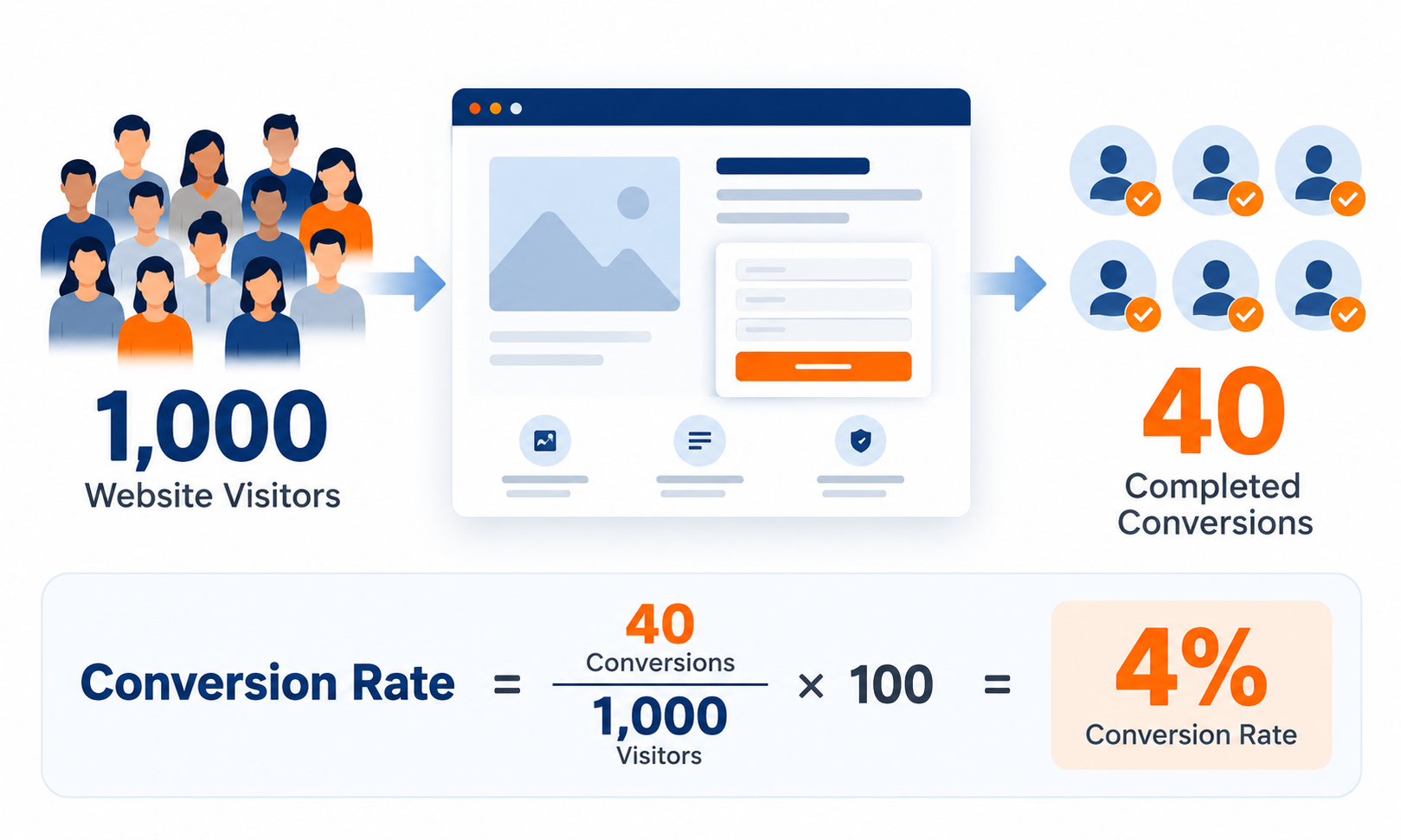
Landing page conversion rate is the percentage of visitors who complete a specific action after arriving on a landing page. Depending on your business objective, that action could be submitting an inquiry, booking a consultation, signing up for a free trial, downloading a resource, or making a purchase.
For example, imagine your business landing page receives 1,000 visitors in a month, and 40 of them complete your inquiry form. Your landing page conversion rate is 4%.
The formula is:
Landing page conversion rate = (Number of conversions ÷ Total landing page visitors) × 100
In this example, the calculation is 40 divided by 1,000, multiplied by 100, giving you a 4% conversion rate.
The important thing is to define what counts as a conversion before measuring performance. A software company may count free trial registrations, while a consultancy may measure qualified enquiries or booked discovery calls. An ecommerce business may focus on completed purchases.
Choose a conversion goal that reflects the purpose of the page and the outcome you want visitors to achieve.
What Is a Good Landing Page Conversion Rate?
There is no single conversion rate that every business should aim for. A good landing page conversion rate depends on your industry, offer, traffic source, audience, buying intent, and the action you want visitors to take.
A visitor downloading a free checklist is making a different commitment from someone requesting a sales consultation or purchasing a high-value service. Comparing these actions against the same benchmark can lead to misleading conclusions.
Instead of relying entirely on an industry average, start by establishing your current conversion rate. Compare performance over time, examine differences between traffic sources, and measure whether your changes improve both conversion volume and lead quality.
For example, if your landing page converts 3% of visitors into inquiries, your first goal might be to improve that rate to 3.5% while maintaining the quality of those inquiries. Treat that figure as an internal improvement target, not a universal benchmark.
The most useful benchmark is one that reflects your business goals and gives you a realistic way to measure progress.
Landing Pages vs Forms: What Actually Drives Conversions?
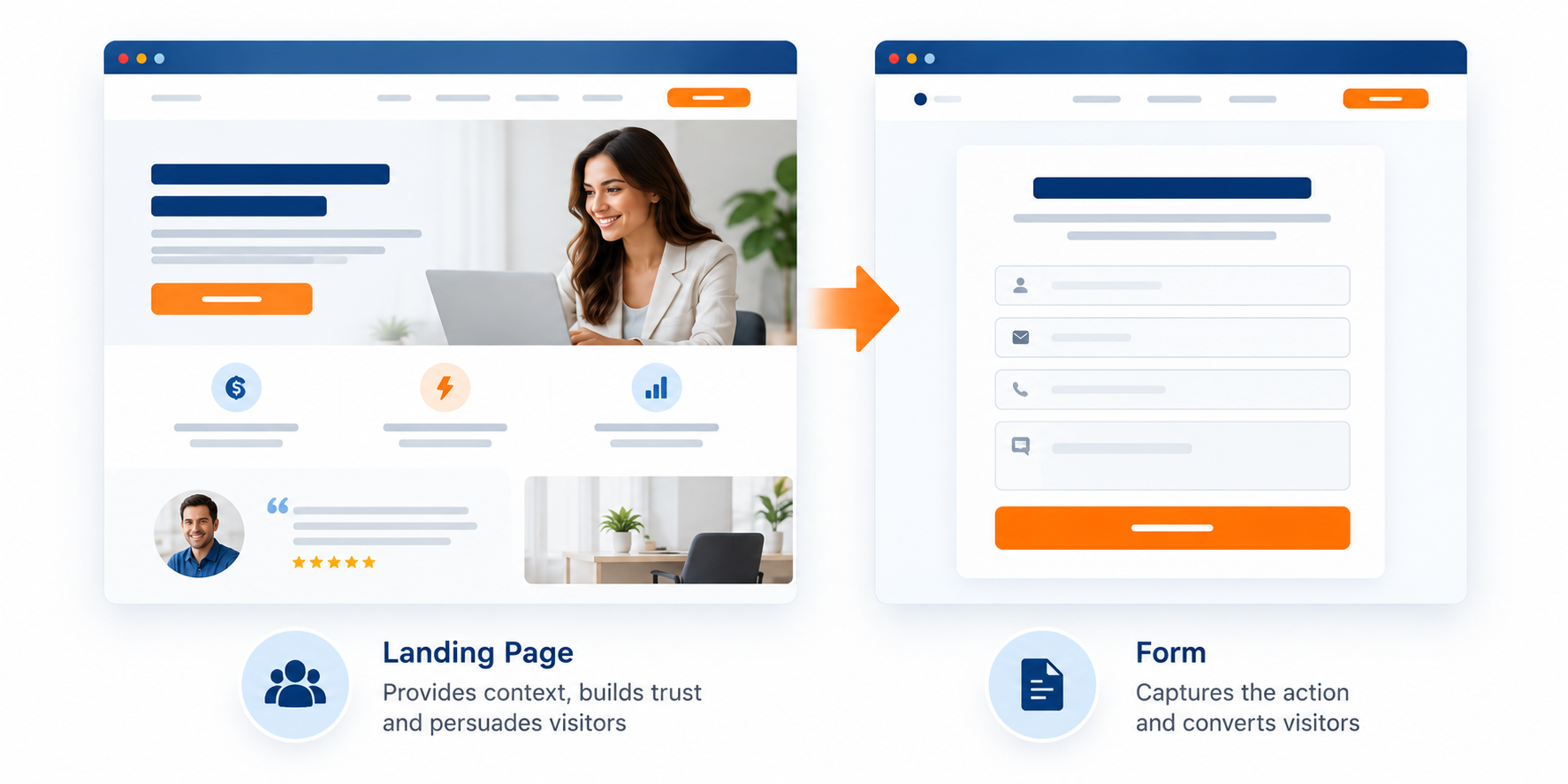
A landing page and a form perform different roles in the conversion journey. A landing page communicates the value of your offer, answers visitor questions, and builds enough confidence for someone to act. A smart form or call to action provides the mechanism for completing that action.
This means the question is not always whether a landing page or a form converts better. The more useful question is whether the entire experience makes it easy for the right visitor to take the intended next step.
Consider a small marketing agency promoting a free strategy consultation. Its landing page explains who the consultation is for, what the visitor will receive, how the session works, and why the agency is qualified to help. A clear call to action then takes the visitor to a booking or inquiry experience.
If the page communicates the value effectively but the next step asks for too much information, conversions may suffer. If the form is simple but the page does not explain the offer, visitors may have little reason to complete it.
The best results come from aligning the message, the offer, and the action. Every part of the experience should support the same objective.
What Affects Your Landing Page Conversion Rate?
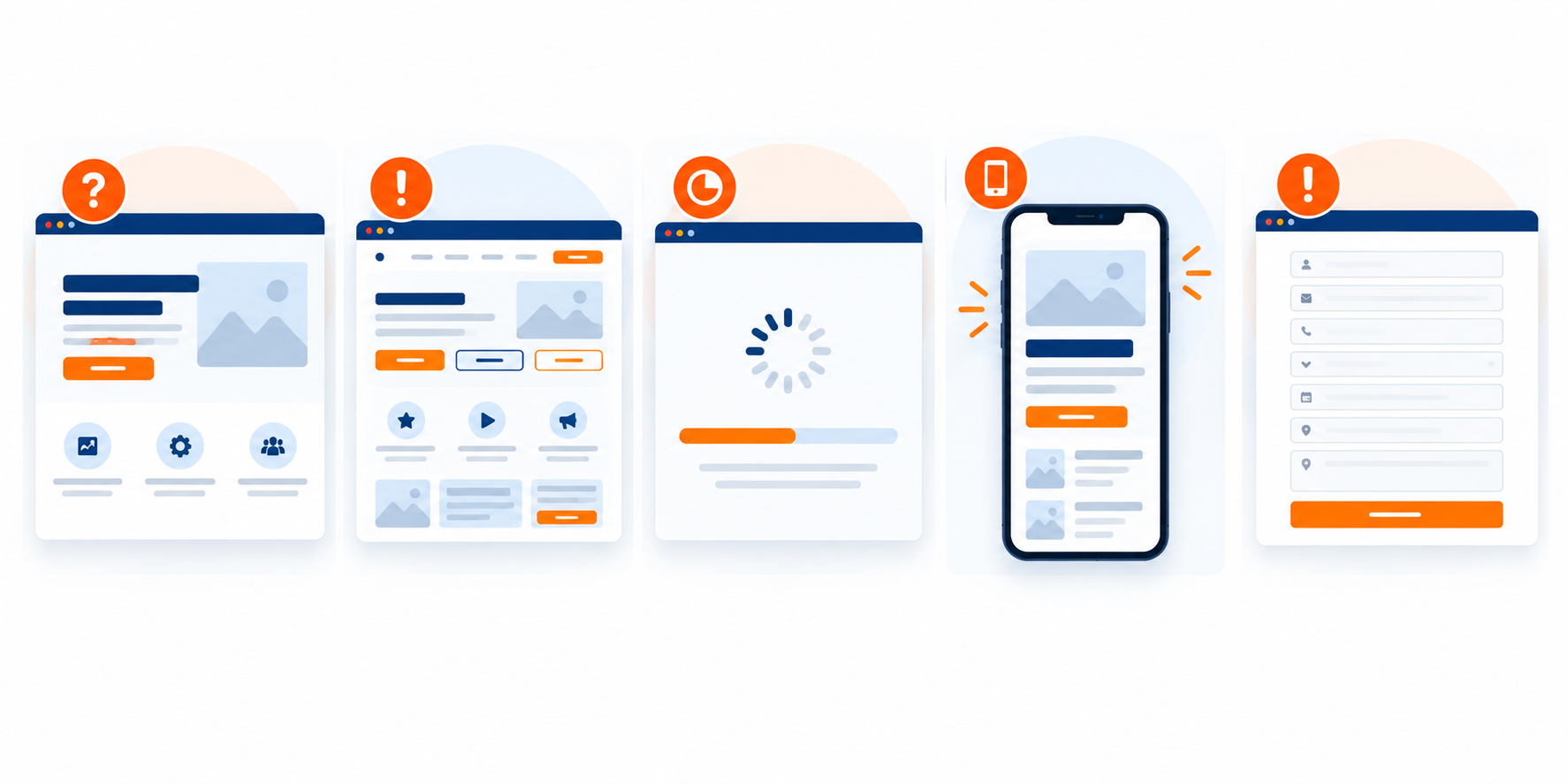
1. Your Headline and Value Proposition
Visitors should understand what your business offers and why it is relevant to them without having to search through paragraphs of copy.
A vague headline such as “Welcome to Our Business” tells visitors very little. A more specific headline communicates an outcome, such as “Simplify Client Onboarding and Get Agreements Signed Online.”
The second headline gives visitors a clearer idea of the benefit. It also helps people decide whether the page is relevant to their needs.
Your headline should match the promise that brought visitors to the page. If an advertisement offers a free consultation, the landing page should immediately confirm that offer rather than introducing an unrelated message.
2. The Relevance of Your Traffic
Not every visitor arrives with the same level of intent.
Someone searching for a specific service may already be comparing providers. Someone discovering your brand through a general social media post may still be learning about the problem. These visitors may respond differently to the same landing page.
Review how visitors arrive through organic search, paid campaigns, email, referrals, and social media. Then check whether the page meets the expectations created by each source.
A high volume of visitors does not automatically mean high conversion potential. Relevant traffic that understands the offer is often more valuable than a larger audience with little interest in taking action.
3. The Number of Distractions on the Page
Every additional element competes for the visitor's attention. Multiple offers, unrelated links, unnecessary navigation, and competing calls to action can make the intended next step less obvious.
A dedicated campaign page should have one primary objective. That does not mean every page needs to look identical or remove every supporting link. It means the headline, content, visuals, and calls to action should work together rather than pulling visitors in different directions.
For example, a page promoting a free product demo should prioritize the demo's benefits, explain what happens during the session, and make booking straightforward. Prominent links to unrelated offers can wait for another part of the customer journey.
4. The Effort Required to Convert
Even visitors who are interested in your offer may abandon the process if the next step feels too demanding.
Consider what you ask visitors to do. A simple newsletter registration has a different information requirement from a detailed service application. Requesting information that is not necessary at the current stage can introduce avoidable friction.
Make the action clear, keep the process proportionate to the offer, and explain why any essential information is needed. If a process requires several steps, show visitors what to expect and make progress easy to understand.
5. Mobile Experience and Page Speed
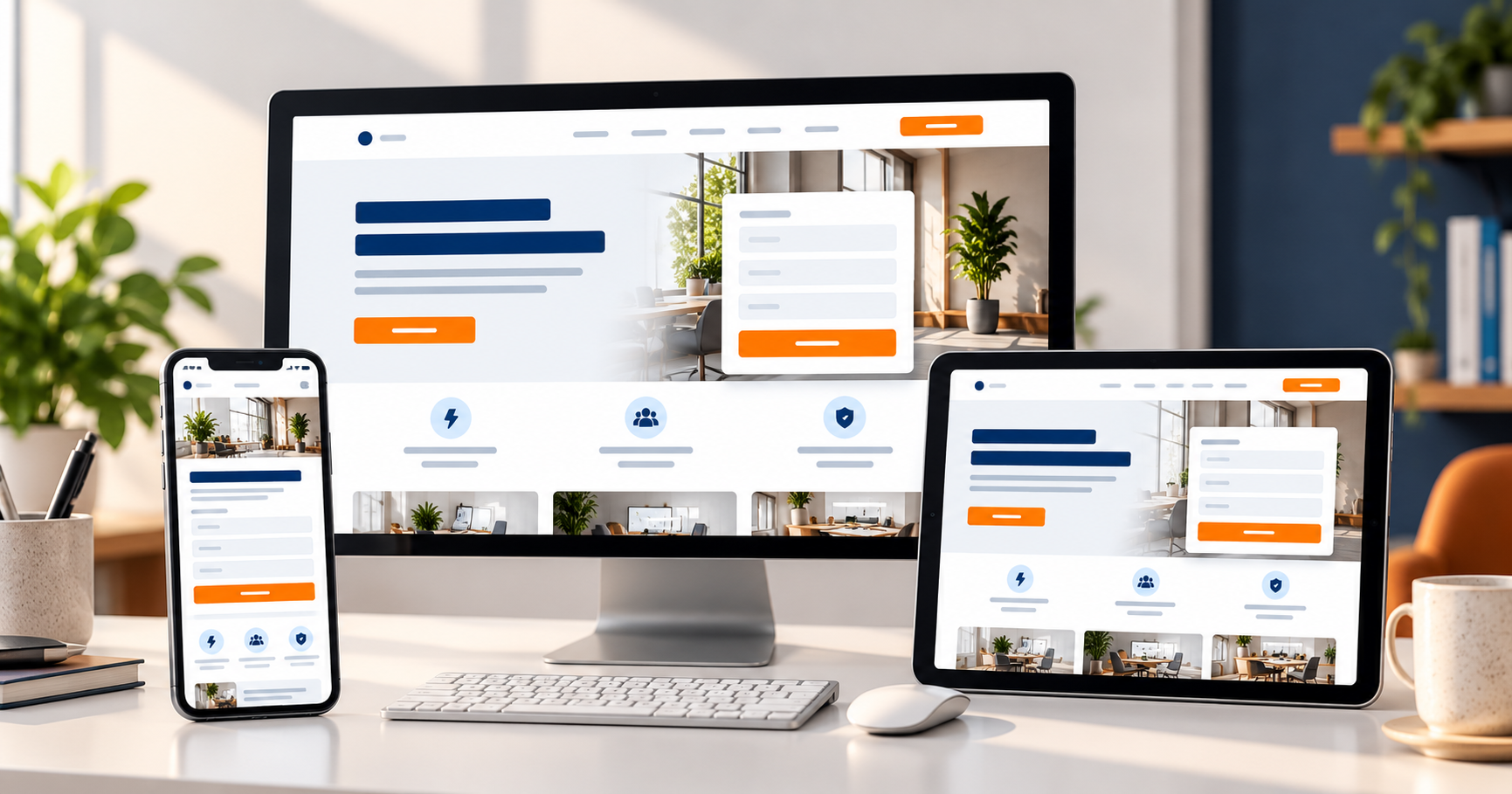
Your landing page should be easy to use on smartphones as well as desktop computers. Small text, cramped fields, awkward button placement, and slow loading can make the experience frustrating.
Check the page on real devices or use responsive testing tools. Make sure the headline is readable, the main call to action is easy to find, the page fits the screen, and any interactive elements work as expected.
Google also recommends reviewing mobile usability, testing landing pages, and monitoring their performance when evaluating landing page experiences. You can use its guidance to identify potential issues with pages receiving paid search traffic. Google Ads Help provides further advice on evaluating landing page performance.
6. Trust and Reassurance
Visitors may hesitate if they are unsure who will contact them, how their information will be used, or what happens after they submit their details.
Help them feel confident by explaining the next step clearly. Depending on your business, useful reassurance may include genuine testimonials, relevant customer examples, transparent pricing information, privacy details, or an explanation of how the service works.
Only use claims, customer logos, and testimonials that you can substantiate. Trust signals should help visitors make an informed decision, not create expectations your business cannot fulfill.
7. The Clarity of Your Call to Action
A call to action should tell visitors exactly what will happen when they click.
Generic wording such as “Submit” may be functional, but more descriptive language can make the next step clearer. Depending on your offer, you could use “Book My Consultation,” “Start My Free Trial,” or “Request a Quote.”
The best wording depends on the action, the audience, and the commitment involved. Make the primary call to action visually distinct, use consistent language throughout the page, and avoid giving equally strong prominence to several competing actions.
9 Ways to Improve Your Landing Page Conversion Rate
Understanding the factors that influence conversions is a starting point. The next step is to identify the changes most likely to improve your own page.
1. Give Every Landing Page One Clear Goal
Before editing your copy or design, define the single main action you want visitors to complete. This could be requesting a quote, booking a consultation, registering for a webinar, or starting a trial.
Build the page around that goal. The headline should introduce the value, the supporting copy should answer relevant questions, and the call to action should make the next step obvious.
If you have several unrelated offers for different audiences, consider creating separate landing pages. This lets you tailor the message to each visitor's needs instead of trying to explain everything on one page.
2. Match the Page to Visitor Intent
Your page should continue the conversation that started before the visitor arrived.
If someone clicks an advertisement for a free website audit, the page should explain the audit, what it includes, and how to request it. If someone arrives through an organic search about your service, the page should address the questions and concerns that motivated that search.
Consistent messaging reduces confusion and reassures visitors that they have reached the right destination. Review your ads, search snippets, email links, and social posts to ensure their promises match the landing page.
3. Make the Value Proposition Specific
Explain the practical outcome visitors can expect rather than relying on broad claims.
For example, “Improve Your Business Processes” is less informative than “Collect Client Details and Approvals in One Online Workflow.” The more specific message gives visitors a clearer reason to continue.
Use language your target audience understands. Focus on the problem you solve, the benefit you offer, and what makes your approach relevant. Avoid exaggerated promises or guarantees that your business cannot support.
4. Remove Unnecessary Friction
Review the entire journey from the first page view to the completed action. Identify steps that feel repetitive, confusing, or unnecessary.
Check whether the call to action is easy to find, whether the form requests only relevant information, whether instructions are clear, and whether visitors know what happens after they convert.
For longer processes, consider breaking the experience into manageable steps. A well-structured journey can make a complex task feel easier without hiding the amount of information required.
5. Design for Mobile Visitors
Do not assume a page that looks good on a desktop will perform equally well on a phone.
Review the mobile layout, spacing, font sizes, field interactions, and button placement. Make sure important information appears in a sensible order, and visitors do not have to zoom in or scroll excessively to understand the offer.
Also check loading performance. Large images, unnecessary scripts, and poorly optimized page elements can make a page slower than it needs to be.
6. Place Trust Signals Near Important Decisions
Visitors often need reassurance immediately before they act. Put relevant proof close to the claim or call to action it supports.
A service business might include a genuine client testimonial near its consultation request. A software company might explain what happens during a free trial and make relevant product information easy to access.
Use evidence that answers actual visitor concerns. A collection of generic badges or unsupported claims is less helpful than clear, relevant information.
7. Test One Meaningful Change at a Time
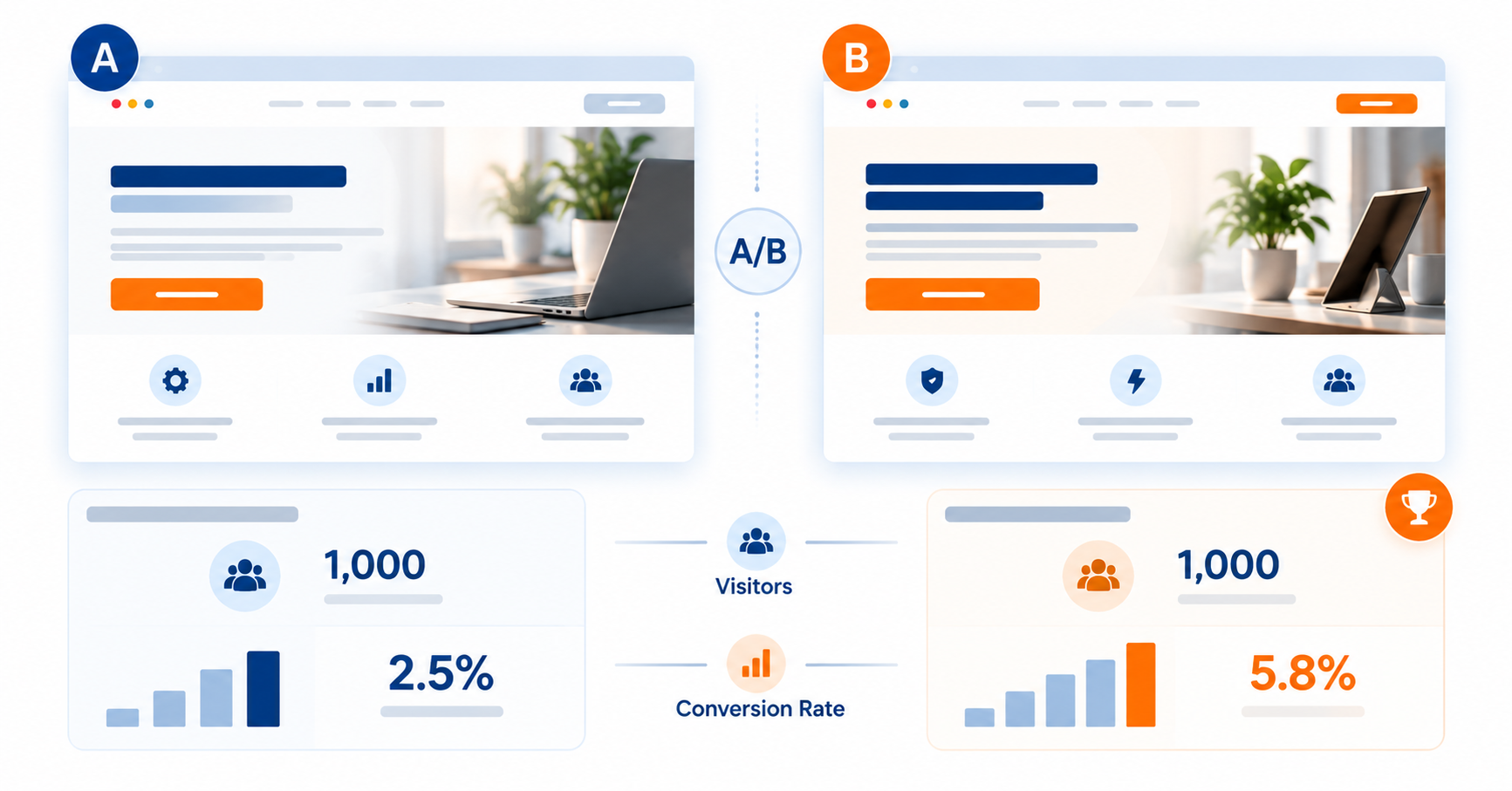
Landing page optimization should be based on evidence rather than assumptions.
You could test two headlines, compare different calls to action, adjust the order of page sections, or examine whether a shorter conversion journey improves completion. When practical, change one main variable at a time so you can better understand what influenced the result.
Use enough data to make the comparison meaningful. Small traffic volumes and a short testing period can produce misleading results, so avoid treating every early fluctuation as a reliable winner.
If you have access to A/B testing tools, use them to compare versions under similar conditions. Record the hypothesis, the change, and the result so the findings can inform future improvements.
8. Measure Conversion Quality, Not Just Conversion Volume
A higher conversion rate is not necessarily better if the additional conversions are irrelevant to your business.
For example, a consultancy might increase enquiry submissions by making its offer broader, but receive more enquiries from people outside its target market. The number of conversions has increased, yet the sales team may spend more time filtering unsuitable leads.
Measure the outcome that matters beyond the initial action. Depending on your business, that may include qualified inquiries, booked meetings, trial activation, completed purchases, or revenue.
This gives you a more complete picture of whether your landing page is contributing to business growth.
9. Review Performance Regularly
Landing page optimization is an ongoing process. Visitor expectations, campaign sources, offers, and competitors can change, so a page that performed well in the past may need attention later.
Review conversion rate alongside traffic volume, traffic source, engagement, and downstream outcomes. Look for meaningful changes and investigate whether they relate to the offer, the page experience, or the type of visitor arriving.
Keep a record of changes you make and the results you observe. Over time, this creates a practical optimization process based on your own audience instead of relying entirely on general advice.
How to Track Your Landing Page Conversion Rate
You cannot improve performance reliably if you do not measure it consistently. Start by deciding which visitor action counts as a conversion and ensuring that action is tracked correctly.
For a page designed to collect inquiries, the conversion might be a completed form. For a software product, it might be a completed free trial registration. For an ecommerce store, it could be a purchase confirmation.
Use analytics tools to monitor relevant visits and conversions. Google Analytics can help you understand traffic acquisition and user behavior when it is configured correctly, while Google Search Console can show how your pages perform in organic search results. These tools answer different questions, so use them together where appropriate.
Calculate the conversion rate using a consistent definition of visitors and conversions. If you compare periods, keep the measurement method consistent and account for changes in traffic source or campaign activity.
For example, suppose a landing page receives 2,000 visitors and generates 60 completed registrations in one month. Its conversion rate is 3%. If a later period produces 80 registrations from 2,000 visitors, the conversion rate is 4%.
That is an increase of one percentage point, or approximately 33.3% relative improvement. The example illustrates the calculation rather than predicting the results any business should expect.
Do not stop at the final percentage. Investigate which traffic sources contribute the most useful conversions, where visitors abandon the journey, and whether the resulting leads or customers meet your business goals.
How CliqForms Helps SMEs Build and Optimize Landing Pages
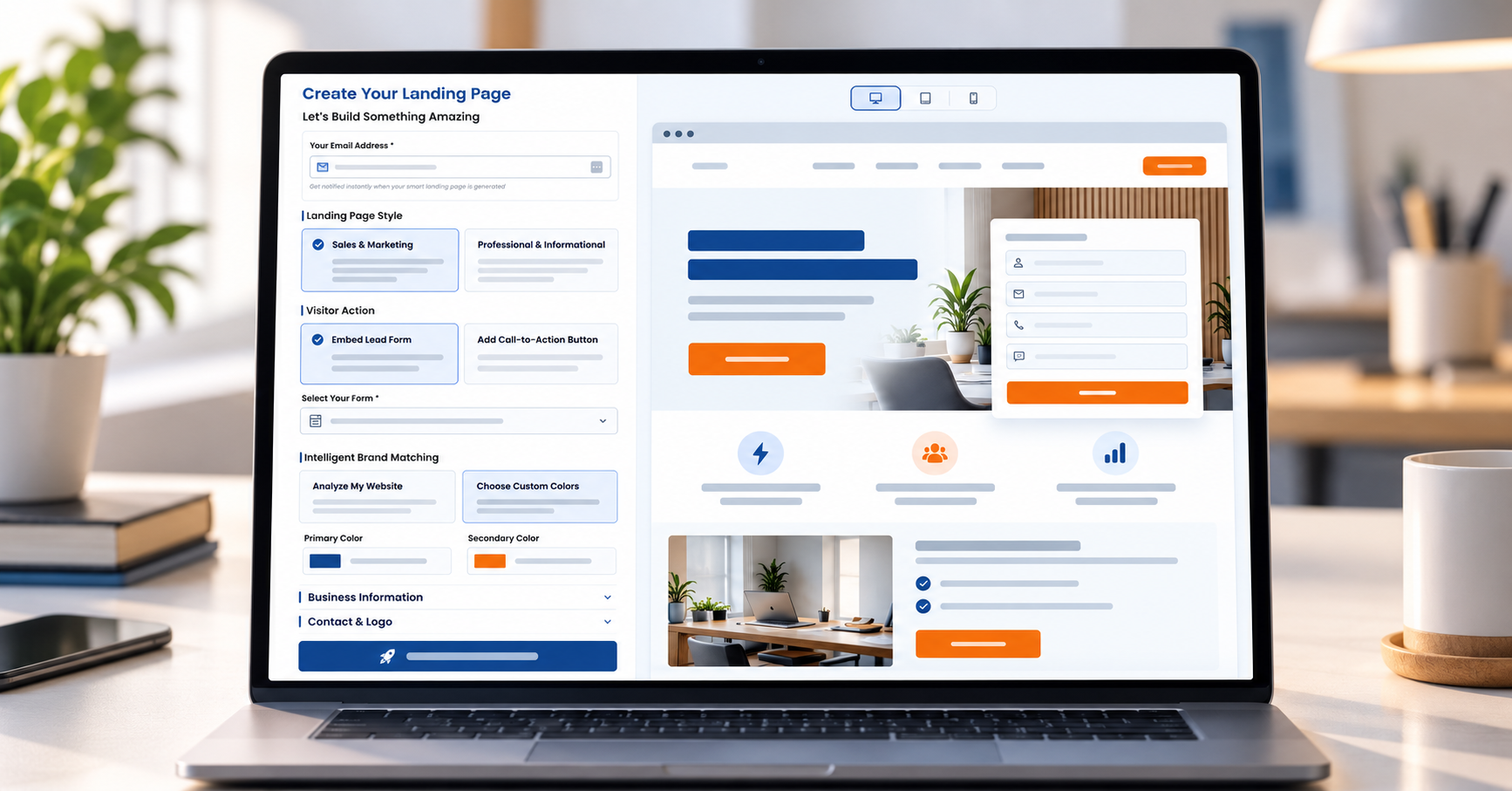
Improving your landing page conversion rate does not always require a complicated technology stack. Small businesses need a practical way to create relevant pages, give visitors a clear next step, and understand what is working.
CliqForms brings landing pages and online forms into one platform, helping businesses create conversion experiences without needing to build every element from scratch.
Create a Landing Page Around Your Offer
The CliqForms Landing Page Builder helps you create pages for campaigns, services, registrations, and other business goals. You can start with your requirements, generate a page, and refine its content and design before publishing.
This gives SMEs a practical starting point for creating focused experiences for different audiences and offers.
Connect the Page to a Relevant Conversion Experience
A landing page needs a clear next step. With CliqForms, you can embed a form into a landing page or website or direct visitors towards an appropriate action.
Depending on your use case, a form can collect inquiries, registrations, applications, or other responses. Multi-step forms and conditional logic can help tailor the questions shown to respondents, while partial lead capture can help preserve information from people who begin but do not finish a form. The outcome depends on the setup and the visitor experience, so test the journey that matters to your business.
Test and Learn From Your Results
CliqForms includes form analytics and A/B testing capabilities that can help you compare form variations and understand which version performs better. Tracking visitors, conversions, and conversion rate gives you a basis for reviewing performance and deciding what to improve next.
The goal is not to assume that a particular design will always convert better. It is to make informed changes, measure their impact, and keep improving the experience for your audience.
If you are looking to simplify the process of creating and refining your conversion journey, explore the CliqForms Landing Page Builder and see how landing pages and forms can work together.
FAQs
How do you calculate the landing page conversion rate?
Divide the number of completed conversions by the total number of landing page visitors, then multiply the result by 100. For example, 50 conversions from 1,000 visitors produce a 5% conversion rate.
What is a good landing page conversion rate for an SME?
A good rate depends on your industry, traffic source, offer, and conversion goal. Establish a baseline using your own data, then compare performance over time and prioritize improvements that increase valuable conversions.
Why is my landing page getting traffic but not converting?
Possible causes include a mismatch between visitor expectations and the page, unclear messaging, an offer that lacks relevance, unnecessary steps, weak calls to action, slow loading, or insufficient trust. Review analytics and test changes to identify the issues affecting your audience.
How can I improve my landing page conversion rate without increasing traffic?
Improve the experience for the visitors you already attract. Make your value proposition clearer, align the page with visitor intent, reduce unnecessary friction, improve mobile usability, and test meaningful changes. Monitor conversion quality as well as volume.
Do landing pages convert better than homepages?
A dedicated landing page can be more effective when visitors arrive for a specific offer because the page can focus on one audience and one action. A homepage serves broader purposes, including navigation and brand discovery. The right choice depends on visitor intent and the goal of the page.
How often should I optimize my landing page?
Review performance regularly and investigate meaningful changes in conversion rate or lead quality. Make updates when your data reveals an opportunity, and allow enough time and traffic to evaluate tests reliably rather than changing the page after every short-term fluctuation.
Can CliqForms help improve landing page conversions?
CliqForms provides a landing page builder, embeddable online forms, conditional logic, multi-step form options, partial lead capture, and form analytics with A/B testing. These features can help businesses build and evaluate conversion journeys, although results depend on the offer, audience, implementation, and ongoing optimization.
Turn More of Your Website Traffic Into Meaningful Actions
Your landing page conversion rate is more than a marketing metric. It helps you understand whether your page gives the right visitors a clear reason and an easy way to act.
Start with the fundamentals. Make the offer specific, align the message with visitor intent, remove unnecessary friction, build trust, and ensure the page works well on mobile. Then measure the results, test meaningful changes, and evaluate the quality of the conversions you generate.
You do not need to change everything at once. A focused, evidence-led approach can help your business understand what works for its audience and where the next improvement opportunity lies.
With CliqForms, you can create landing pages, connect them to forms, and use performance insights to keep refining the conversion experience.
Ready to build a landing page for your next campaign? Explore CliqForms and create a clearer path from visitor interest to action.