


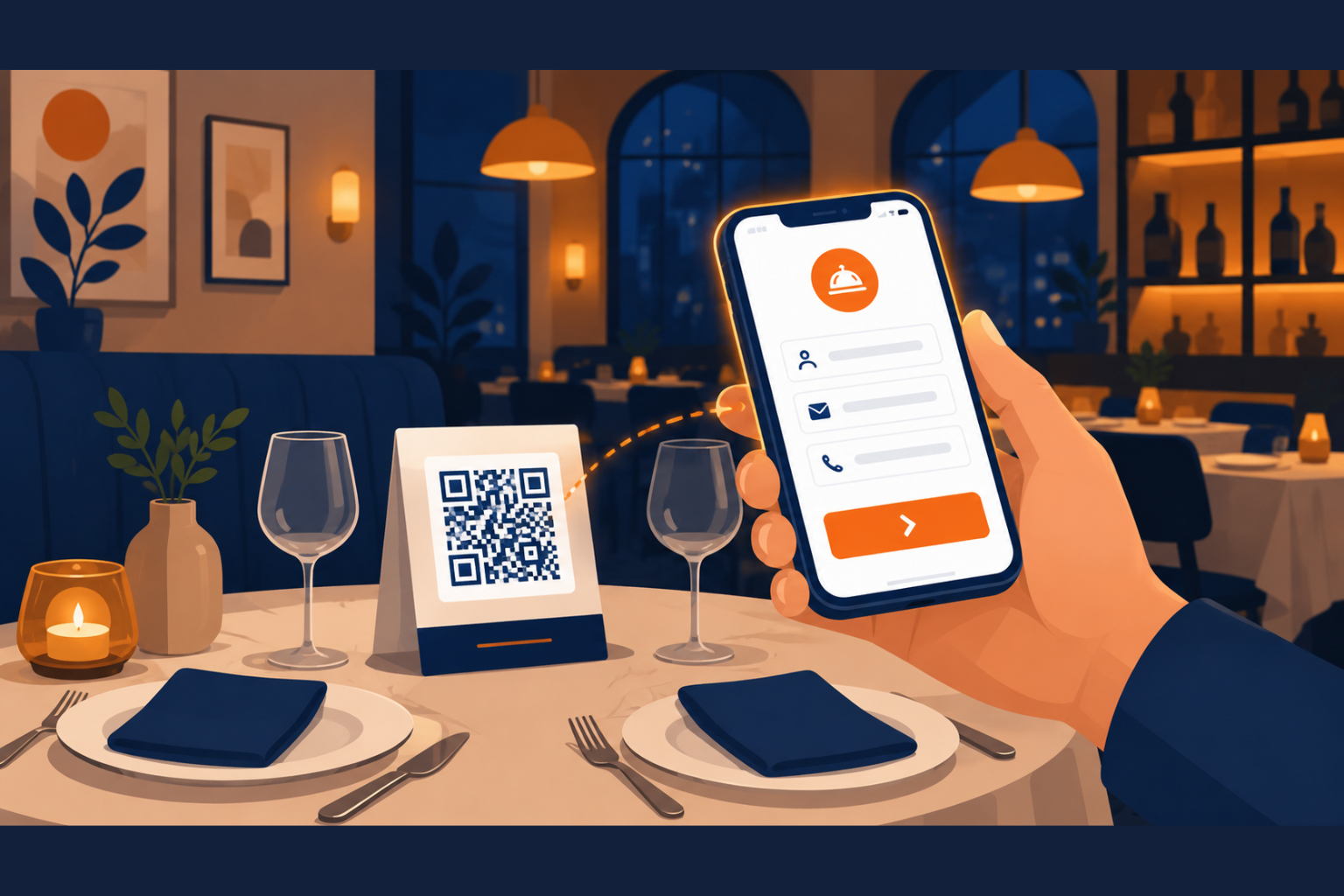
A table of four spent two hours in your restaurant. They ordered well, they enjoyed it, and they tipped generously. And then they walked out the door, and you never heard from them again.
No name. No email address. No phone number. No way to tell them about your new seasonal menu, your Friday night special, or the event you are running next month. They are gone, and the only chance you have of seeing them again is hoping they happen to think of you the next time they want to eat out.
This is the quiet revenue problem most restaurant owners do not talk about because it has always felt like an unavoidable reality of the industry. But it is not unavoidable. Restaurants that are growing their repeat customer base in 2026 are not doing it with expensive loyalty apps or complicated CRM systems. They are doing it with a QR code on the table, a smart form on a phone screen, and an automated follow-up that runs by itself.
Here is exactly how it works and how to set it up.
The Hidden Cost of Not Capturing Diner Details
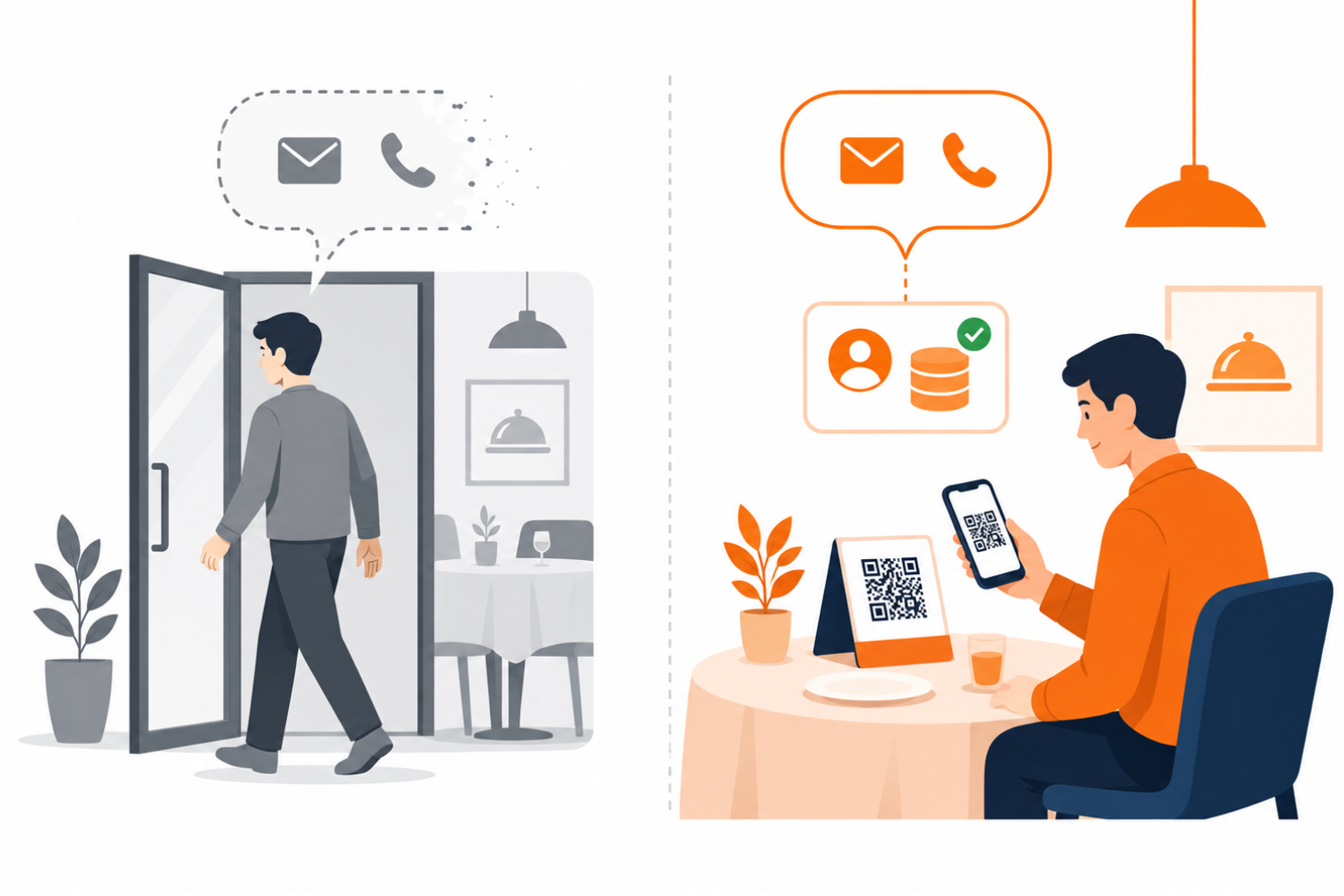
Acquiring a new restaurant customer costs between five and seven times more than retaining an existing one. Yet most restaurants invest the majority of their marketing budget in acquisition, running ads and promotions to attract new diners while doing almost nothing to stay in touch with the people who already chose them.
The reason is structural. Until recently, there was no practical mechanism for a sit-down restaurant to capture customer details at the point of dining without it feeling intrusive or creating awkward friction at the table. Paper sign-up sheets went largely ignored. Asking staff to collect email addresses during service was inconsistent and often forgotten. Loyalty punch cards were a retention tool, not a data capture one.
Restaurant and hospitality applications account for 42% of all QR code scans globally, making food service the single largest QR use case in the world. Over 75% of restaurants worldwide now use QR codes for digital menus. The infrastructure is already there. The opportunity is in what happens after the scan. -- QRTRAC QR Code Statistics Report, 2026
The QR code changed this equation. Your diners already expect to scan a code at the table. The behavior is normalized. The only question is whether you are directing that scan toward a menu and nothing else, or toward a menu and a smart form that captures something valuable in return.
How the QR Code to Customer Database System Works
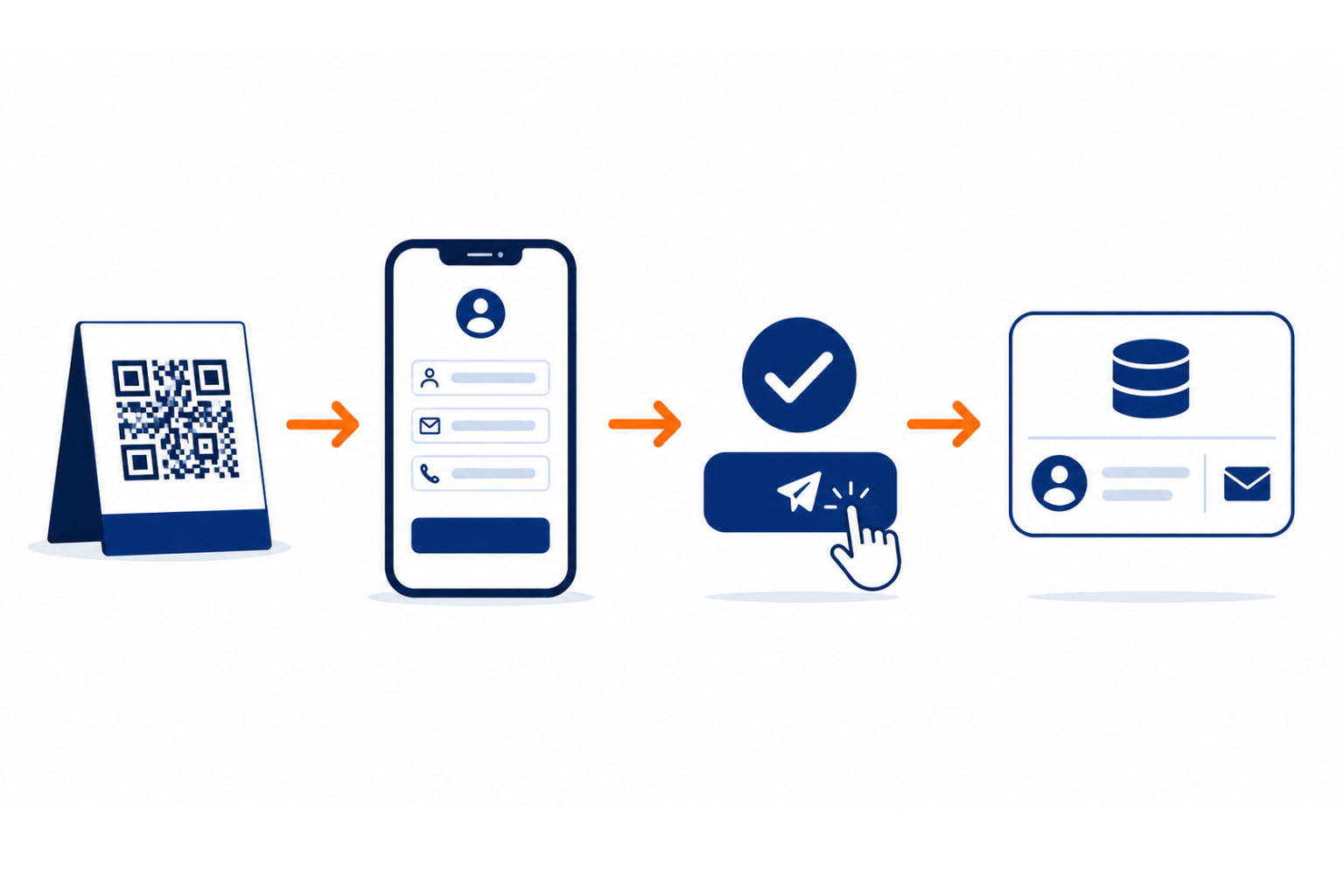
The system is straightforward. A QR code printed on a table card, receipt, coaster, or window sticker links to a short CliqForms smart form. The diner scans it, fills in their details, and submits it. Those details land instantly in your dashboard and trigger an automated follow-up sequence through your connected email or CRM tool. No manual data entry. No staff involvement. No awkward conversation.
The key to making this work is designing the form and the offer around something the diner actually wants, not just something useful to you.
Step 1. Create the right offer to earn the scan
A QR code that simply says 'Join our mailing list' will be ignored. A QR code that says 'Scan for 10% off your next visit' will be scanned. The offer does not need to be large. A free dessert on your birthday, early access to your weekend specials, a complimentary drink on your next visit, and entry into a monthly prize draw. The offer needs to feel worthwhile to the diner in the moment, and it needs to be visible enough to notice without being so intrusive it disrupts the dining experience.
Step 2. Build a short, mobile-first smart form in CliqForms
Your form needs three fields and nothing more. A first name, an email address, and one optional question that helps you personalize future communication. That optional question might be their birthday month, their dietary preferences, or simply how often they dine out. CliqForms lets you use conditional logic so the form adapts based on what they select, keeping it short and relevant for every diner regardless of their answers.
The form must be mobile-first. Every diner scanning a QR code at a table is on a phone. If the form is difficult to read, slow to load, or requires zooming and scrolling, they will close it. CliqForms builds mobile-responsive forms by default, with large tap targets and fast load times that match the expectation of someone filling in a form between courses.
Step 3. Connect the form to your follow-up system
This is where the database actually gets built. CliqForms connects to Zapier, Make, and webhooks, which means every form submission can automatically add a contact to Mailchimp, ActiveCampaign, your CRM, or a simple Google Sheet. The moment a diner submits their details, they are added to your list, they receive an automated welcome message confirming their offer, and your restaurant has a contact it can market to for the next twelve months without spending another dollar on acquisition.
Step 4. Place your QR code where it will be seen
Placement drives scan rates more than any other variable. The highest-performing placements for restaurant QR lead forms are table tents positioned at eye level near the condiments; the back of the physical menu or menu cover; the bottom of the receipt with a clear offer callout; and window or counter stickers near the exit for takeaway and quick-service venues. A one-sentence offer and a short action instruction next to the QR code consistently outperform a code with no context. Tell people what they get and what to do.
What to Do With the Database Once You Have It
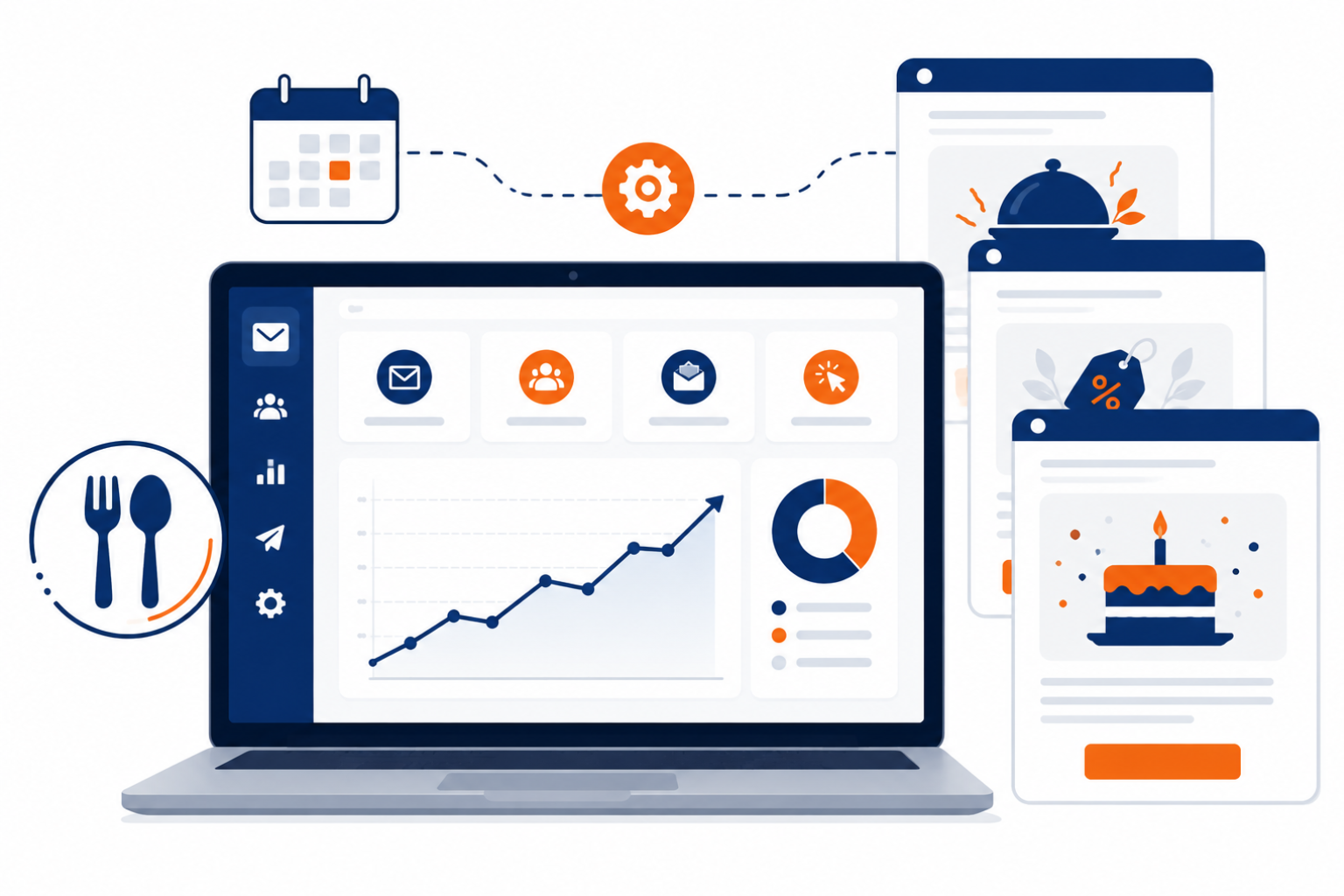
Capturing details is the first step. What you do with them determines whether the system actually drives repeat business.
The most effective restaurant email sequences are simple, consistent, and personal in tone. A welcome message sent immediately after sign-up confirming the offer. A monthly update featuring what is new on the menu or what is coming up in the next few weeks. A birthday message sent in the diner's birthday month with a specific offer attached. A re-engagement message sent to anyone who has not visited in 90 days.
Research shows that 61% of consumers actively engage with QR-powered loyalty and offer programs when the value exchange is clear. One restaurant chain that added QR codes to table tents saw a 458% increase in Google reviews in a single month. The scan behavior is already there. The question is what you connect it to. -- Supercode Restaurant QR Research, 2026
None of this requires sophisticated marketing automation. A basic Mailchimp account connected to CliqForms via Zapier is enough to run this entire sequence. The email goes out automatically. The follow-up fires without anyone on your team having to remember to send it. Your front-of-house staff focuses on service. The database grows in the background.
The additional benefit is that a database of opted-in customers is the most cost-effective promotional channel available to a restaurant. When you have a quiet Tuesday to fill, a slow week coming up, or a new dish you want to push, you have a direct line to people who already like your food. No ad spend. No reaching strangers. Just a message to people who have already chosen you once.
How CliqForms Makes This Easy for Restaurants
CliqForms is built for exactly this use case. You do not need a developer, a marketing team, or a complicated tech stack to run a QR-powered lead capture system for your restaurant.
The CliqForms QR code generator creates a scannable code linked directly to your form. You print it, place it, and it works. The smart form builder takes minutes to set up and includes a signature field if you need diners to agree to marketing communications as part of the submission. Conditional logic keeps the form short regardless of what the diner selects. Mobile-first design means the experience is clean on any phone.
When a diner submits, the lead data fires instantly to your connected tools via webhook or Zapier. Your CRM gets the contact. Your email tool triggers the welcome sequence. Your team gets a notification if you want one. And the form submission record lives in your CliqForms dashboard with a timestamp, the diner's details, and their answers to your qualification question.
There are no per-submission fees. No complicated integrations that require ongoing maintenance. And no dependency on a third-party loyalty platform that owns the relationship with your customers. Your database lives in your tools, under your control.
Frequently Asked Questions
How do I use a QR code for my restaurant to capture customer details?
Create a short smart form in CliqForms with three fields: name, email, and one optional question. Generate a QR code in CliqForms that links directly to the form. Print the QR code on a table tent, receipt, or coaster with a clear offer next to it, such as a discount on the next visit or a birthday reward. When diners scan and submit, their details are automatically added to your email list or CRM via Zapier or a webhook connection.
What offer works best for getting diners to scan a QR code and share their details?
Offers with immediate perceived value consistently outperform generic mailing list sign-ups. A discount or complimentary item on the next visit, a birthday month offer, early access to specials or events, or entry into a monthly prize draw are all effective. The offer needs to be visible next to the QR code and simple enough to understand in two seconds. Keep the form short so the friction of signing up is minimal relative to the benefit.
Do I need technical knowledge to set up a QR code lead form for my restaurant?
No. CliqForms is built for non-technical users. The form builder is drag-and-drop and takes minutes to configure. The QR code is generated automatically and linked to your form. For the automated follow-up connection, Zapier requires a one-time setup with no ongoing technical management. If you want to start even more simply, you can connect form submissions to a Google Sheet first and add email automation later.
Is it legal to collect customer data through a QR code form in a restaurant?
Yes, provided you obtain clear consent at the point of collection. Your CliqForms form should include a short consent statement informing the diner that their details will be used for marketing communications, with a checkbox confirming their agreement. CliqForms supports this with a dedicated checkbox field and consent confirmation. This is standard practice under Australian Privacy Act requirements, GDPR in Europe, and CAN-SPAM in the United States.
How quickly can a restaurant start building a customer database with this system?
A basic QR lead capture system using CliqForms can be set up and live in under an hour. Build the form, generate the QR code, print a table card, and connect the form to your email tool via Zapier. From the first diner who scans, you are building a database. Most restaurants that implement this system consistently add between 50 and 200 new opted-in contacts per month depending on covers and placement.
Key Takeaways
- Every diner who leaves your restaurant without sharing their details is a customer you cannot market to, invite back, or build a relationship with. QR codes and smart forms close that gap without disrupting the dining experience.
- Restaurant and hospitality applications account for 42% of all QR code scans globally. Your diners are already comfortable scanning. The opportunity is in what you connect the scan to.
- The system has four parts: a clear offer to earn the scan, a short mobile-first form to capture details, a connection to your email tool for automated follow-up, and strategic QR code placement where diners will see it.
- CliqForms handles the form, the QR code, and the connection to your existing tools. No developer needed. No per-submission fees. No third-party platform owning your customer data.
- A restaurant that consistently captures diner details and follows up effectively can fill quiet periods, promote new dishes, and drive repeat visits without spending another dollar on acquiring new customers.
Your Next Diner Could Become a Regular
The table is cleared. The bill is paid. Right now, that diner is just someone who ate at your restaurant once. With a QR code, a well-built form, and an automated follow-up, they become a contact in your database, a name on your birthday list, and a person who receives your message the next time you have something worth telling them about.
That is how restaurants build repeat business without relying on chance. Not by hoping people come back, but by giving yourself the means to bring them back.
CliqForms gives you the tool to make it happen, starting today.




.png)